
Wisconsin Ob-Gyn: Forward Focus
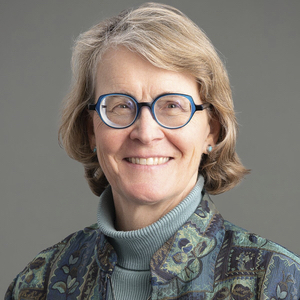
Since we began our academic mission of training ob-gyn physicians in 1929, the University of Wisconsin School of Medicine and Public Health Department of Obstetrics and Gynecology has set the standard for reproductive health education, research, clinical care, and advocacy. Today, we continue that legacy of excellence as a department of physicians, advanced practice providers, researchers, trainees, and staff who are all unified in leading reproductive health forward.
As part of the University of Wisconsin, we believe deeply in the Wisconsin Idea: that the UW Department of Ob-Gyn's educational, research, and clinical advances should improve lives beyond the boundaries of the university. What happens in Wisconsin shouldn’t stay in Wisconsin, which is why I’m so excited to share some of the biggest news out of the UW Department of Ob-Gyn with you.
Working alongside the resilient, creative, adaptable members of this department has been the honor of my career. It’s a privilege to introduce you to some of Wisconsin’s leaders in reproductive health training, research, and care, and the ways they’re working on changing the world.
On, Wisconsin!
Ellen Hartenbach, MD
Ben Miller Peckham, MD, PhD Chair in Obstetrics and Gynecology

David Abbott retires after decades of field-changing PMOS/PCOS research
David Abbott, PhD, retired from the University of Wisconsin School of Medicine and Public Health Department of Obstetrics and Gynecology after a decades-long career as a leader in Polyendocrine Metabolic Ovary Syndrome (PMOS, formerly Polycystic Ovary Syndrome or PCOS) research. His central scientific achievement is the development of prenatally androgenized female rhesus monkey models of PMOS: the primate model that changed the field. Throughout his career, Dr. Abbott was also a generous mentor and award-winning teacher, inspiring learners at all levels to pursue careers in science.
UW Collaborative for Reproductive Equity funding renewed for three years
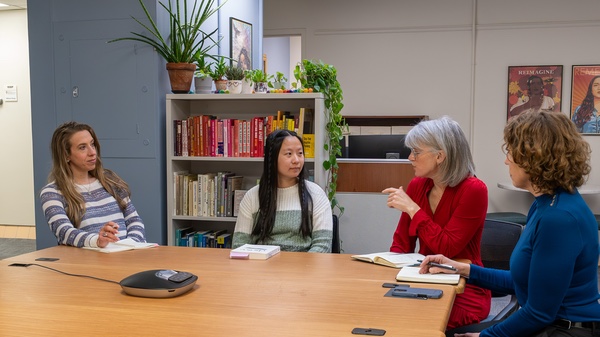
At a time with increasing and ever-changing barriers to reproductive health, understanding how policies affect patient and provider experiences with reproductive health care is more critical than ever. Established in 2018 with a $573,142 grant from a family foundation, the UW Collaborative for Reproductive Equity (CORE) is a multidisciplinary research collective that brings faculty and trainees from across the University of Wisconsin–Madison campus—as well as from other universities in Wisconsin—together to investigate the barriers and supports to reproductive autonomy in the state. In 2026, CORE received a renewal grant that provides $5.5 million to support research for the next three years, including $1.7 million in the first year.
Data Link for Healthy Families builds maternal-child health data pipeline
One of the largest electronic health record (EHR) data sets in Wisconsin has a glaring omission: because patients who get prenatal care within the UW Health system deliver their babies in Wisconsin's busiest birthing hospital—which is part of a different health system—the data set does not include their birth outcomes.
“We know that what happens during pregnancy and during delivery can have lifelong impacts on people’s health,” says Ellen Hartenbach, MD, chair of the UW Department of Ob-Gyn. “But how can we see the connections between, for example, high blood pressure or preeclampsia during delivery and someone’s long-term cardiovascular health risk?" To help solve this problem, the UW Department of Ob-Gyn proposed the Data Link for Healthy Families, which builds a bridge between the patients' obstetrical care data in the UnityPoint Health-Meriter EHR to the prenatal, postnatal, and infant care data from UW Health EHR, housed on a HIPAA-compliant research platform at the UW School of Medicine and Public Health.
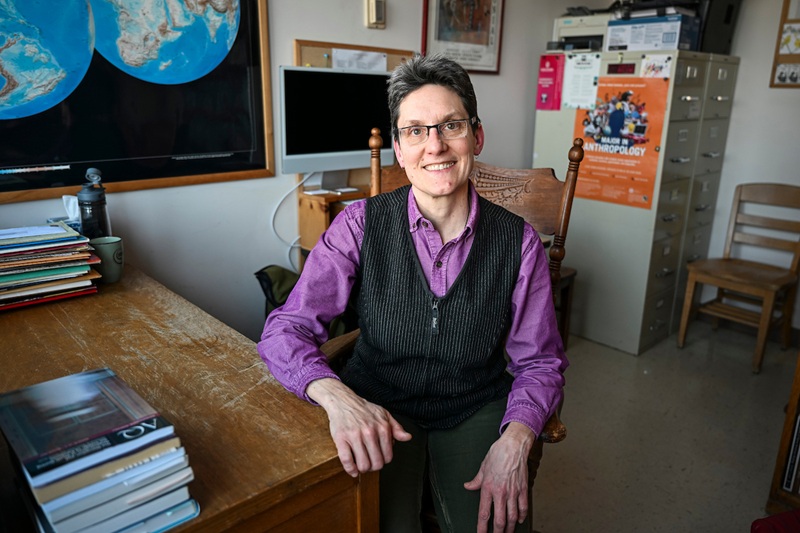
Claire Wendland selected for Guggenheim Fellowship
Dr. Wendland, who is a trained obstetrician-gynecologist as well as a medical anthropologist, has been an impactful researcher, teacher, and mentor with a career focused on the complex relationships involved in practicing medicine on people around the world. The Guggenheim Fellowship provides a monetary stipend to each recipient to support their independent work under “the freest possible conditions.” Dr. Wendland’s award will support the research and drafting of a manuscript built around the remarkable story of Dr. Daniel Malekebu, Malawi’s first doctor — but that also illustrates ties between Central Africa and the Jim Crow South in the U.S. in the early twentieth century.